

TMS FOR OCD IN WEST JORDAN, UTAH
When intrusive thoughts and compulsions keep taking over, another treatment option may help.
Obsessive-compulsive disorder can create a relentless cycle of unwanted thoughts, fear, doubt, and repetitive behaviors. Even when you recognize the pattern, resisting it can feel overwhelming.
NeuroStar TMS is an FDA-cleared, noninvasive adjunct treatment for adults with OCD. At Altium Health, treatment begins with a thoughtful medical assessment and a plan built around your symptoms, history, goals, and existing care.

UNDERSTANDING OCD
OCD is more than being organized or particular.
OCD may involve intrusive thoughts, images, or urges that feel frightening, disturbing, or inconsistent with who you are. Compulsions are behaviors or mental rituals used to reduce the distress or uncertainty those thoughts create.
Having an intrusive thought does not mean you want it to happen, believe it, or that it reflects your character. OCD often targets what matters most to a person, which is one reason the thoughts can feel so upsetting. You can discuss these experiences without judgment, and effective treatment is available.
-
OCD can create intense doubt, even after something has already been confirmed. A person may repeatedly check locks, appliances, messages, memories, or ask others for reassurance. Relief is often temporary, causing the doubt to return.
-
Fears involving germs, illness, chemicals, bodily fluids, or feeling “unclean” may lead to repeated washing, cleaning, changing clothes, or avoiding certain objects and places. These behaviors can become time-consuming and interfere with daily life.
-
Some people feel compelled to count, repeat actions, arrange items, or perform tasks until they feel “just right.” Compulsions may also happen internally, such as replaying conversations, reviewing memories, repeating words, or mentally checking for mistakes.
-
OCD may create persistent fears that you could accidentally hurt someone, overlook a danger, or make a decision with serious consequences. These fears can lead to repeated checking, avoidance, confession, or reassurance seeking—even when there is no evidence that harm occurred.
-
Intrusive thoughts may focus on deeply personal or sensitive subjects. Because these thoughts often conflict with a person’s values, they can cause significant fear, guilt, or shame. The presence of an unwanted thought does not mean that you agree with it or intend to act on it.
-
A person may begin avoiding situations that trigger intrusive thoughts or uncertainty. Over time, OCD-related avoidance can affect relationships, school, work, parenting, driving, healthcare, and other ordinary parts of life.
ANOTHER OPTION FOR OCD CARE
How TMS treatment for OCD works.
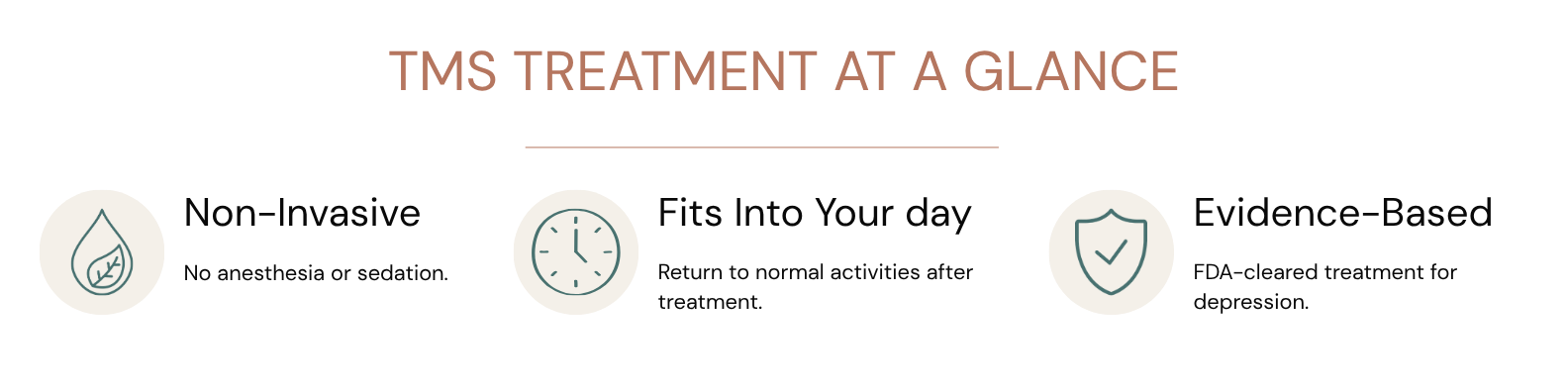
TMS uses focused magnetic pulses to stimulate areas of the brain involved in OCD symptoms. Treatment is provided in the office while you remain awake and alert.
There is no anesthesia, incision, or recovery period. You can return to most normal activities after your appointment.
TMS is an adjunct treatment, meaning it may be provided alongside psychotherapy, medication management, or other clinical support rather than replacing the care that is already helping you.

PERSONALIZED FROM THE BEGINNING
Is TMS for OCD right
for you?
TMS may be considered for adults with an OCD diagnosis whose symptoms continue to cause significant distress or interfere with work, relationships, responsibilities, or daily functioning.
Before recommending treatment, our medical team will review:
Your current symptoms and diagnosis
Previous therapy and medication experiences
Medical and psychiatric history
Current medications
Treatment goals
Safety considerations and possible contraindications
Insurance requirements and anticipated costs
Not everyone with OCD will be an appropriate candidate. A consultation is the best way to understand your options.

COORDINATED CARE
You are more than a diagnosis—and your care should reflect that.
OCD may occur alongside depression, anxiety, trauma, ADHD, or substance use concerns. Altium brings medical and behavioral healthcare together so your treatment can reflect the complete picture.
We will help you understand what TMS can address, how it may fit with your existing treatment, and what additional support may be beneficial.


REAL-WORLD NEUROSTAR OUTCOMES
A treatment backed by meaningful results.

83%
Experienced a measurable
response
62%
Achieved
remission
8.5M+
NeuroStar treatments
delivered
Response and remission figures are based on clinician-rated real-world outcomes for patients who completed an acute NeuroStar treatment course. Individual results vary.
YOUR FIRST TMS APPOINTMENT
A thoughtful evaluation before treatment begins.
Your first appointment is designed to answer your questions and ensure that TMS is safe, appropriate, and personalized to your needs.
During your TMS evaluation, our team will:
Review your current symptoms and treatment goals
Discuss medications, therapy, and other treatments you have tried
Review your medical, neurological, and mental health history
Screen for factors that may affect TMS safety or eligibility
Explain the recommended treatment schedule
Review insurance authorization requirements and anticipated costs
Give you time to ask questions before making a decision
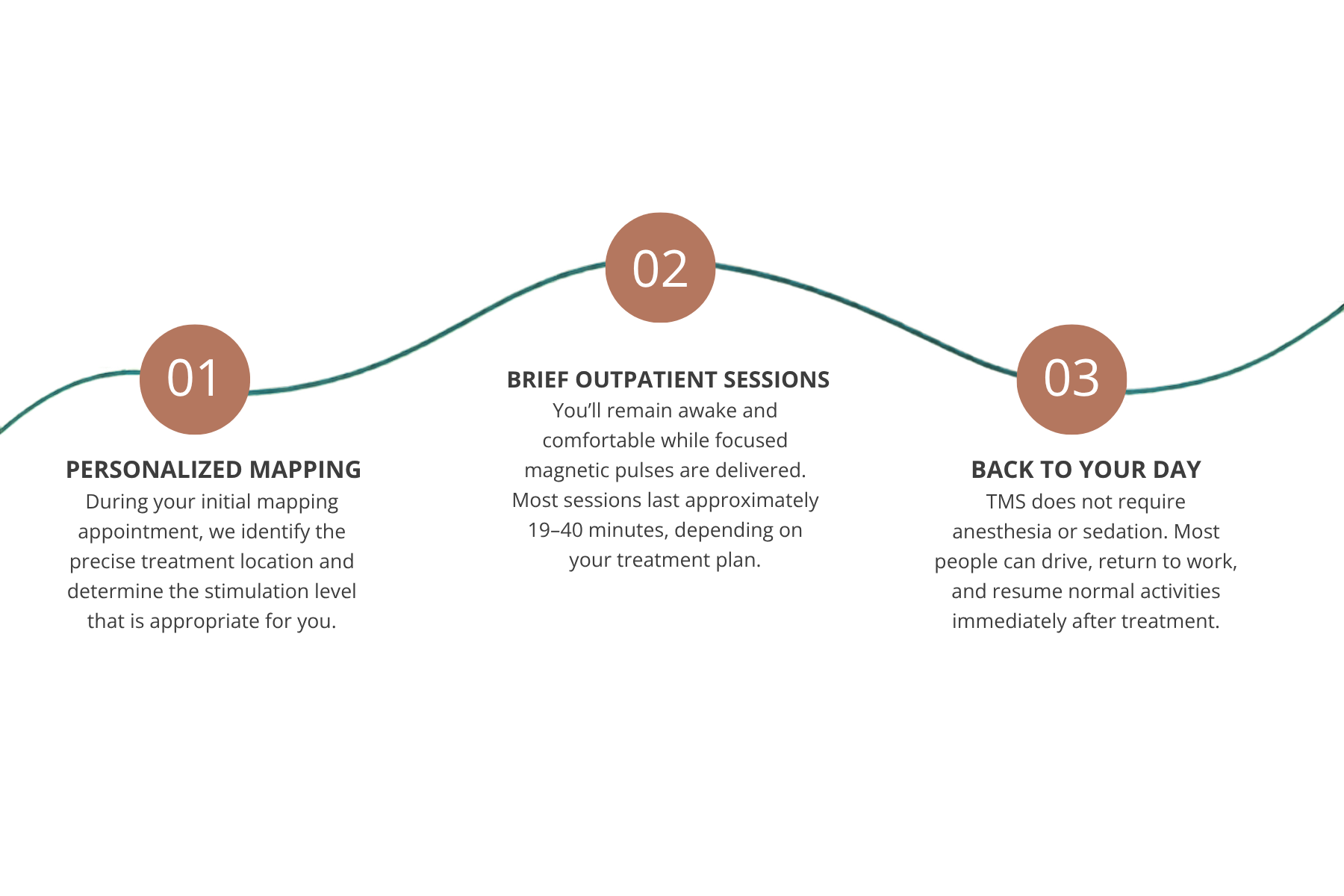
If TMS is recommended, your team will complete individualized mapping and motor-threshold testing to identify the treatment location and determine the appropriate stimulation level for you.
You do not need to arrive knowing whether TMS is the right answer. We will help you understand your options and make an informed decision.

WHAT TO EXPECT
Comfortable care,one step at a time
COVERAGE & COST
TMS is covered by many insurance plans.
Coverage depends on your plan and treatment history. Our team will verify your benefits, explain requirements, and help you understand expected costs before treatment begins.
WHY ALTIUM HEALTH
TMS is one part of a more connected approach.
At Altium Health, you are not treated like a diagnosis or passed between disconnected services. TMS is supported by a broader medical and behavioral health team that can help you understand the full range of options available.
Your care may include:
Psychiatric evaluation and medication management
Individual therapy
Ongoing symptom and outcome monitoring
TMS or ketamine treatment when clinically appropriate
Intensive Outpatient or Partial Hospitalization support when a higher level of care is needed
Help navigating insurance and authorization requirements
A respectful, client-centered, judgment-free environment
If your needs change, your care can change with you. You do not have to determine the right service on your own—we will help you find the most appropriate place to begin.
QUESTIONS ABOUT TMS
Clear answers
before you begin.
We know you have questions. Our team is here to provide clear information so you can feel confident about your next step.
-
Most people describe TMS as a tapping or pulsing sensation on the scalp. Some experience temporary tenderness or discomfort near the treatment area, particularly during the first week. Your treatment settings can often be adjusted to help you remain comfortable as you get used to the sensation.
-
Most sessions last approximately 19–40 minutes, depending on your personalized treatment plan. You’ll remain awake and alert throughout the session.
-
A typical course includes 36 treatments completed over approximately six weeks. Sessions are generally scheduled five days a week, followed by a gradual taper. Your provider will recommend a schedule based on your symptoms, progress, and individual needs.
-
Yes. TMS does not require anesthesia or sedation and does not affect alertness. Most people can drive, return to work, and resume their normal activities immediately after treatment.
-
Many insurance plans cover TMS for depression when certain medical-necessity requirements are met. Coverage varies by plan and may depend on your diagnosis and previous treatment history. Our team will verify your benefits, explain any authorization requirements, and review anticipated costs with you before treatment begins.
-
TMS is generally well tolerated. The most common side effects are temporary scalp discomfort, tenderness, tingling, or headache, particularly during the first several treatments. These effects typically lessen as treatment continues. A seizure is a rare but serious potential risk, occurring in fewer than 0.1% of patients. Our medical team will review your health history and discuss the benefits and potential risks before treatment begins.
-
No. TMS is not electroconvulsive therapy, or ECT. TMS uses focused magnetic pulses and does not require anesthesia or intentionally cause a seizure. You remain awake and alert throughout treatment.
-
Many people continue medication, therapy, or both while receiving TMS. Your medical provider will review your current treatment plan and determine whether any changes are appropriate. Do not stop or change medication without speaking with your prescribing provider.
-
Every person responds differently. Some people begin noticing changes during the first few weeks, while others experience improvement later in the treatment course. We monitor symptoms and progress throughout treatment so that your provider can evaluate how you are responding.
-
NeuroStar TMS is indicated for decreasing anxiety symptoms in adults with major depressive disorder who also experience anxiety symptoms. TMS is not automatically appropriate for every anxiety condition, so a clinical evaluation is needed to determine whether it fits your diagnosis and needs.
-
TMS may not be appropriate for people with certain implanted devices or non-removable conductive metal in or near the head. Other medical, neurological, or safety considerations may also affect eligibility. Our medical team will carefully review your history before treatment begins.
-
TMS is only one option. Altium Health also offers psychiatric care, medication management, therapy, ketamine treatment, and structured outpatient programs. If TMS is not appropriate, our team can help you understand other services that may better fit your needs.