

TMS FOR ADOLESCENT DEPRESSION IN WEST JORDAN, UTAH
When depression is keeping your teenager from moving forward, there may be another option.
Depression can affect how a teenager feels, thinks, sleeps, connects with others, performs at school, and imagines their future. When therapy, medication, or other support has not provided enough improvement, families may feel unsure about what to try next.
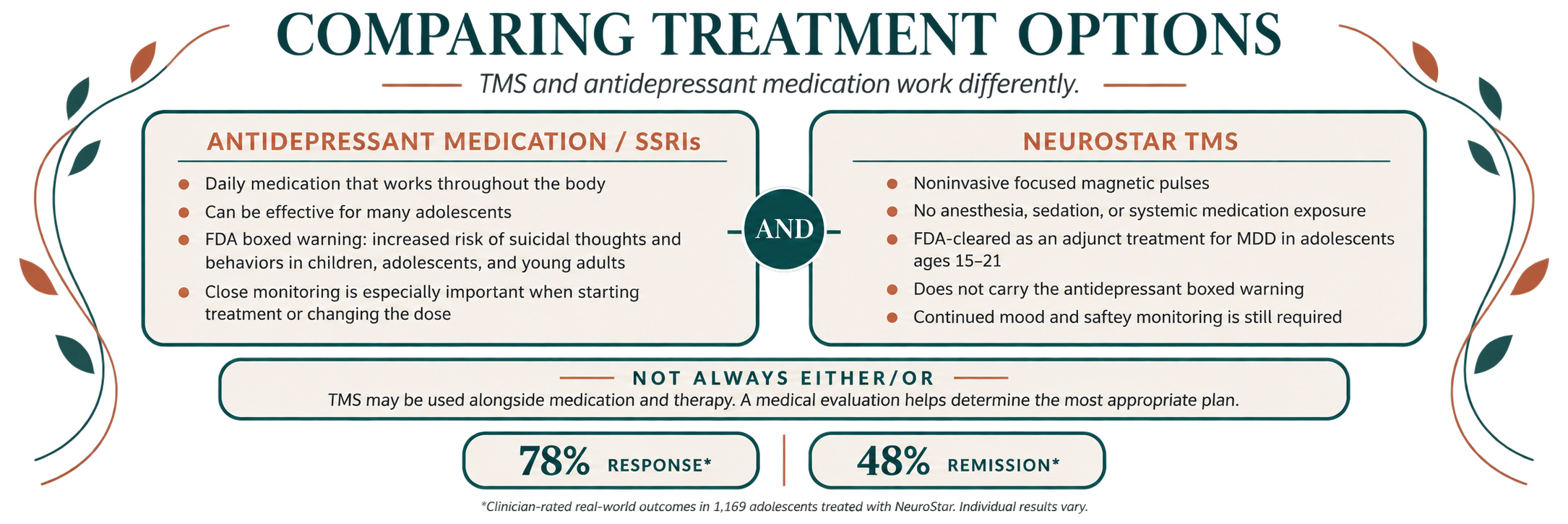
NeuroStar TMS is an FDA-cleared adjunct treatment for major depressive disorder in adolescents ages 15–21. It provides a noninvasive treatment option that can be incorporated into a broader, personalized care plan.

WHEN DEPRESSION DOESN’T LOOK OBVIOUS
Teen depression can appear in different ways.
Adolescent depression does not always look like sadness. Families may notice changes in behavior, personality, motivation, relationships, or daily functioning.
An evaluation can help distinguish depression from ordinary developmental changes and identify the type of support that may be appropriate.
-
Teen depression does not always look like sadness. It may appear as changes in relationships, behavior, sleep, school performance, motivation, or decision-making.
Experiencing one of these changes does not necessarily mean that an adolescent has depression. Families should pay particular attention when changes last for several weeks, represent a noticeable difference from the teen’s usual behavior, cause significant distress, or interfere with everyday life.
A comprehensive evaluation can help determine what is happening and which treatments may be appropriate. For adolescents ages 15–21 diagnosed with major depressive disorder, NeuroStar TMS may be considered as part of a broader treatment plan.
Withdrawal From Family or Friends
A teenager experiencing depression may spend more time alone, stop responding to friends, avoid family activities, or seem increasingly disconnected from people they previously trusted. This can be mistaken for ordinary teenage independence, especially when the change happens gradually.
The important question is whether the withdrawal represents a meaningful change from the adolescent’s usual behavior. When isolation is persistent or accompanied by other symptoms, an evaluation can help determine whether depression, anxiety, bullying, trauma, or another concern may be contributing.
-
Depression in adolescents may appear as irritability, frustration, anger, or intense emotional reactions rather than visible sadness. A teenager may become easily overwhelmed, react strongly to small problems, argue more frequently, or seem constantly on edge.
Irritability can have several possible causes, so careful assessment is important. A psychiatric provider will consider the teen’s overall mood, sleep, energy, behavior, medical history, and possible symptoms of anxiety, ADHD, trauma, bipolar disorder, or other conditions before recommending treatment such as TMS.
-
A teenager may stop participating in sports, hobbies, music, friendships, family activities, or other experiences they once enjoyed. They may continue attending but seem emotionally disconnected, or they may say that activities feel pointless or require too much effort.
This loss of interest or pleasure is an important symptom of depression. When it persists despite therapy, medication, or other support, families may want to ask whether additional treatment options—including TMS for an appropriately diagnosed adolescent—should be considered.
-
Depression can affect the body as well as mood. A teenager may sleep much more or less than usual, struggle to get out of bed, feel exhausted despite adequate rest, or experience noticeable changes in appetite or weight.
These changes can also be related to medical conditions, medications, stress, substance use, or disrupted routines. An evaluation helps identify possible causes and ensures that any TMS recommendation is based on a complete understanding of the adolescent’s physical and mental health.
-
Depression can make it harder to wake up, concentrate, complete assignments, remember information, manage stress, or believe that schoolwork matters. Families may notice falling grades, frequent absences, missed deadlines, school avoidance, or a sudden loss of motivation.
These changes should not automatically be viewed as laziness or defiance. When depression is affecting school participation and daily functioning, treatment should focus on helping the teenager regain stability—not simply improving academic performance. TMS may be one part of that plan for adolescents who meet the clinical criteria.
-
A teenager experiencing depression may become unusually critical of themselves, feel like a burden, assume that nothing will improve, or believe that they disappoint everyone around them. They may focus intensely on mistakes or have difficulty recognizing their strengths and progress.
Statements such as “Nothing matters,” “I ruin everything,” or “Everyone would be better without me” should be taken seriously. Treatment can help address the depression underlying these beliefs. TMS offers a non-drug, noninvasive option that may be used alongside therapy, medication, and family support.
-
Depression can make thinking feel slower and ordinary decisions feel exhausting. A teenager may become forgetful, lose track of conversations, struggle to begin tasks, reread the same material repeatedly, or feel unable to choose between simple options.
Concentration problems can also occur with ADHD, anxiety, sleep problems, substance use, medication effects, or medical conditions. A thorough evaluation is necessary to clarify the cause and determine whether treatment should focus on depression, another condition, or several overlapping concerns.
-
Some adolescents use alcohol, cannabis, nicotine, medications, or other substances to escape emotional pain, sleep, feel more connected, or temporarily quiet difficult thoughts. Others may begin driving recklessly, leaving home unexpectedly, engaging in unsafe sexual behavior, or making impulsive decisions that are unlike their usual behavior.
These changes require a broader safety and diagnostic assessment. TMS treats major depressive disorder; it does not directly treat substance use or every form of risky behavior. When concerns overlap, Altium’s medical and behavioral health teams can help develop a coordinated plan that addresses the full picture.
-
Any statement, message, drawing, online post, or behavior involving self-harm, death, suicide, feeling like a burden, or believing that others would be better off without the teenager should be taken seriously. Asking directly about suicide does not place the idea in someone’s mind—it creates an opportunity for honest conversation and support.
TMS is not an emergency or crisis intervention. If an adolescent may be in immediate danger, has attempted suicide, or has a plan and access to the means to harm themselves, call 911 or go to the nearest emergency department. Call or text 988 for immediate support through the Suicide & Crisis Lifeline.
After immediate safety needs are addressed, the treatment team can determine whether TMS may be appropriate as part of the adolescent’s continued depression care.
A NONINVASIVE OUTPATIENT OPTION
How TMS works for adolescent depression.
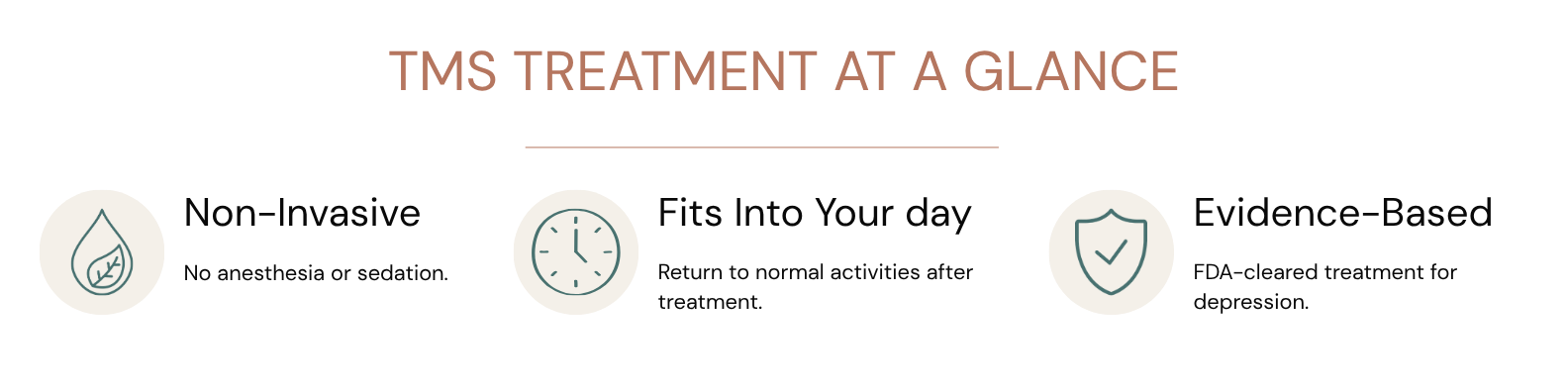
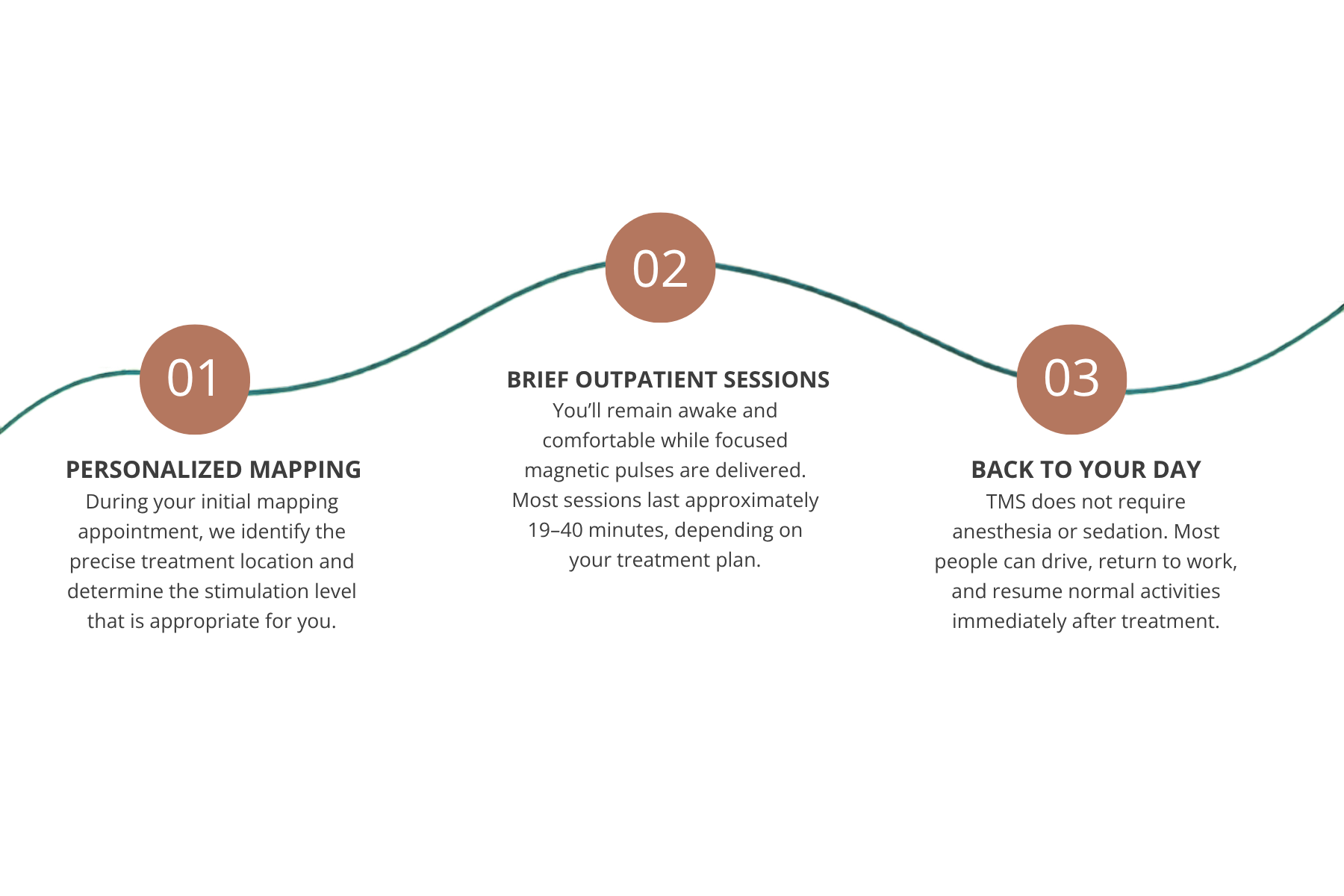
TMS uses focused magnetic pulses to stimulate areas of the brain involved in mood regulation. Your teenager remains awake throughout treatment, and no anesthesia or sedation is required.
Most appointments are brief outpatient sessions. Because there is no required recovery period, adolescents can generally return to school, activities, and normal responsibilities afterward.
Treatment begins with personalized mapping to identify the appropriate treatment location and intensity. The specific schedule and treatment plan are determined by the medical provider.

CARE BUILT AROUND THE TEEN
Teenagers deserve a voice in their treatment.
Successful adolescent care involves more than treating symptoms. We want young people to feel heard, respected, and included in decisions about their care.
Parents and caregivers are also important partners. Within appropriate clinical, legal, and confidentiality boundaries, our team works with families to understand concerns, discuss recommendations, monitor progress, and support treatment outside the clinic.
TMS may be combined with:
Individual therapy
Psychiatric evaluation
Medication management
Family support
School or community-based resources
Other appropriate behavioral health services

DETERMINING THE RIGHT NEXT STEP
Is adolescent TMS appropriate for
your teenager?
TMS may be considered for adolescents ages 15–21 with major depressive disorder. A medical evaluation is required before treatment begins.
The evaluation will consider:
Current depression symptoms and their impact
Previous therapy and medication experiences
Medical and psychiatric history
Current medications
Safety concerns
The adolescent’s and family’s goals
Possible contraindications
Insurance requirements and anticipated costs
TMS is not appropriate for every adolescent. Our team will explain the potential benefits, limitations, risks, and available alternatives so your family can make an informed decision.

YOUR FIRST TMS APPOINTMENT
A thoughtful evaluation before treatment begins.
Your first appointment is designed to answer your questions and ensure that TMS is safe, appropriate, and personalized to your needs.
During your TMS evaluation, our team will:
Review your current symptoms and treatment goals
Discuss medications, therapy, and other treatments you have tried
Review your medical, neurological, and mental health history
Screen for factors that may affect TMS safety or eligibility
Explain the recommended treatment schedule
Review insurance authorization requirements and anticipated costs
Give you time to ask questions before making a decision
If TMS is recommended, your team will complete individualized mapping and motor-threshold testing to identify the treatment location and determine the appropriate stimulation level for you.
You do not need to arrive knowing whether TMS is the right answer. We will help you understand your options and make an informed decision.

WHAT TO EXPECT
Comfortable care,one step at a time
COVERAGE & COST
TMS is covered by many insurance plans.
Coverage depends on your plan and treatment history. Our team will verify your benefits, explain requirements, and help you understand expected costs before treatment begins.
WHAT PARENTS CAN EXPECT FROM THE INITIAL EVALUATION
The first appointment is a conversation—
not a commitment.
You do not need to decide whether TMS is right for your teenager before contacting us. The initial evaluation gives your family an opportunity to meet with our provider, discuss what has been happening, review previous treatment, and ask questions.
During the evaluation, our provider may review:
Current depression symptoms and their effect on daily life
Safety concerns, including self-harm or suicidal thoughts
Previous therapy, medications, and other treatments
Current medications and relevant physical-health history
Seizure history and other TMS safety considerations
Any metal or implanted medical devices
School, family, social, and developmental factors
Your adolescent’s goals, concerns, and treatment preferences
Whether TMS should be considered as part of the larger treatment plan
If TMS is not the right option, we will discuss other appropriate next steps whenever possible.

WHY FAMILIES CHOOSE ALTIUM
A thoughtful next step for your teen—and support for your whole family.
When an adolescent is struggling with depression, the effects often reach beyond their symptoms. School, friendships, family relationships, confidence, and daily routines can all become harder.
At Altium Health, adolescent TMS care is physician-led, personalized, and built around the needs of the young person—not simply their diagnosis. Parents receive clear information and ongoing support, while adolescents are treated with respect and given a meaningful voice in their care.
QUESTIONS PARENTS OFTEN ASK
Clear answers
before you begin.
We know you have questions. Our team is here to provide clear information so you can feel confident about the next step.
-
Most people describe TMS as a tapping or pulsing sensation on the scalp. Some experience temporary tenderness or discomfort near the treatment area, particularly during the first week. Your treatment settings can often be adjusted to help you remain comfortable as you get used to the sensation.
-
Most sessions last approximately 19–40 minutes, depending on your personalized treatment plan. You’ll remain awake and alert throughout the session.
-
ot necessarily. Adolescent TMS is used as an adjunct treatment, meaning it may be added to an existing treatment plan. Some adolescents continue therapy or medication during TMS. Medication should never be stopped or changed unless directed by the prescribing provider.
-
Our team will use regular symptom measures, clinical conversations, parent and adolescent observations, and changes in everyday functioning to monitor progress. Improvement may be gradual, and different changes may become noticeable at different points in treatment.
-
That is completely understandable. We will show them the equipment, explain what they may hear and feel, and give them time to ask questions before treatment begins. Their comfort and willingness to participate matter.
-
TMS is generally well tolerated. The most common side effects are temporary scalp discomfort, tenderness, tingling, or headache, particularly during the first several treatments. These effects typically lessen as treatment continues. A seizure is a rare but serious potential risk, occurring in fewer than 0.1% of patients. Our medical team will review your health history and discuss the benefits and potential risks before treatment begins.
-
We will make every reasonable effort to identify a workable schedule. Because TMS does not require sedation or a recovery period, many adolescents can return to school or other activities after treatment. Exact appointment availability and the recommended schedule will be reviewed with your family.
-
Tell our clinical team immediately about significant changes in mood, behavior, self-harm, or suicidal thinking. TMS appointments are not a substitute for emergency or crisis care. If your adolescent may be in immediate danger, call 911, go to the nearest emergency department, or call or text 988.
-
NeuroStar TMS is indicated for decreasing anxiety symptoms in adults with major depressive disorder who also experience anxiety symptoms. TMS is not automatically appropriate for every anxiety condition, so a clinical evaluation is needed to determine whether it fits your diagnosis and needs.
A DIFFERENT OPTION FOR ADOLESCENT DEPRESSION
Your family does not have to determine the next step alone.
If depression continues to interfere with your adolescent’s life despite previous treatment, an evaluation can help you understand whether TMS should be considered.
NeuroStar TMS is FDA-cleared as an adjunct treatment for Major Depressive Disorder in adolescents ages 15–21. It is available by prescription, requires an individualized medical evaluation, and may not be appropriate for everyone.
Our team will listen to what your family has experienced, answer your questions honestly, and help you identify a thoughtful path forward.